

For small medical practices, MVP (MIPS Value Pathways) reporting can feel like navigating a maze. While the goal of MVPs is to simplify reporting under value-based care, the reality often feels overwhelming. Limited staff, tight budgets, and complex CMS requirements can make reporting appear almost impossible — yet it’s a crucial part of maintaining reimbursements, avoiding penalties, and demonstrating quality care, but P3Care is providing these services.
In this guide, we’ll explore why small practices struggle with MVP reporting, provide detailed examples, and outline practical solutions to help small practices succeed.
Before diving into challenges, it’s important to understand MVP reporting:
For small practices, participating in MVP reporting is optional in 2026, but it is essential to stay competitive and avoid potential payment reductions. However, this is where many challenges begin.
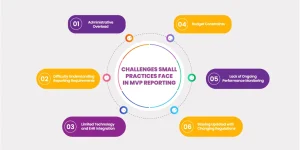
The Problem:
Small practices typically operate with minimal administrative staff. Often, the same team handles billing, patient scheduling, and compliance. Adding MVP reporting on top of these tasks creates overload.
Example:
Picture a two-physician clinic where one office manager does it all. MVP reporting turns an already demanding role into an even greater challenge, requiring precise measure tracking, data accuracy, and timely submissions, often with minimal guidance.
Solution:
The Problem:
MVP reporting requirements are detailed and sometimes confusing. Small practices may struggle with:
Example:
A family practice might be unsure whether to report on chronic disease management measures or preventive care measures, leading to errors in reporting.
Solution:
P3Care delivers structured training, standardized templates, and expert guidance to help practices implement MVP reporting accurately and efficiently.
The Problem:
Many small practices have EHRs that aren’t fully supported for MVP reporting. Manual data entry or disconnected systems create inefficiencies and errors.
Example:
Patient data may be stored in one system, lab results in another, and immunization records in a third. Consolidating all this data for MVP reporting can take hours.
Solution:
The Problem:
Hiring consultants or buying advanced reporting tools can be expensive. Small practices often operate on tight margins and may hesitate to invest, even if it reduces future risk.
Example:
A solo physician clinic may delay buying a reporting software, thinking manual reporting is “good enough,” only to face penalties for incomplete submissions.
Solution:
The Problem:
Small practices often check performance only at year-end. This reactive approach means issues are discovered too late to correct.
Example:
A practice may find in December that some preventive care measures weren’t reported correctly, leaving little time to fix errors before submission deadlines.
Solution:
P3Care provides continuous performance monitoring, real-time reporting dashboards, and expert review services to help practices stay compliant throughout the year—not just at submission time.
The Problem:
CMS rules and MVP requirements change annually. Small practices without dedicated compliance staff may fall behind on updates.
Example:
A practice may continue reporting outdated measures because they weren’t aware of CMS updates, leading to penalties or reduced scores.
Solution:
When small practices adopt structured approaches, MVP reporting becomes more manageable:
For practice looking for a seamless way to manage reporting and optimizing workflow, P3care offers MVP reporting solutions that are designed to streamline workflow to simplify process and efficiency.
By overcoming these challenges and by early adoption, proactive planning can help small practices in the following ways :
In short, MVP reporting can transform from a daunting requirement into a valuable tool that supports better operations and care delivery.
MVP reporting will continue to evolve, and small practices that build strong foundations now will be better positioned to adapt. Early adoption, proactive planning, and the right support can turn MVP reporting into a competitive advantage rather than a burden.
Small practices face real and significant challenges in MVP reporting, but these challenges are manageable with the right strategies. By focusing on relevance, embedding reporting into daily operations, leveraging technology, and seeking guidance when needed, small practices can navigate MVP reporting successfully — improving compliance, reducing stress, and enhancing patient care.
MVP (MIPS Value Pathways) is a CMS framework that groups related quality measures to simplify value-based care reporting. It helps practices report more relevant, specialty-specific performance data.
MVP reporting is optional in 2026 but is expected to become mandatory in 2027. Early participation helps practices prepare for future requirements and avoid rushed implementation.
Failure to report MVP or MIPS data can result in Medicare payment reductions and lower performance scores. Accurate reporting is essential to protect revenue and compliance.
Practices can simplify reporting by integrating MVP measures into daily workflows, using automated dashboards, and conducting regular performance audits. Outsourcing complex tasks can further reduce workload.
P3Care offers end-to-end MVP reporting solutions, including training, workflow optimization, real-time monitoring, and CMS-compliant submissions. This helps practices reduce administrative burden and improve reporting accuracy.