

In today’s healthcare landscape, delivering quality patient care is only part of the challenge; ensuring financial stability is equally critical. At the center of this balance lies revenue cycle management ( RCM ), the process that ensures providers get paid accurately and on time for the services they deliver. Strong RCM is vital, yet the system is riddled with inefficiencies that drain resources and revenue.
In fact, U.S. hospitals lose an estimated $125 billion every year due to revenue cycle inefficiencies from denied claims to billing errors and delayed payments. These losses don’t just affect bottom lines; they impact staffing, patient services, and long-term growth.
This is where technology is stepping in AI in revenue cycle and management is providing to be a game changer, offering smarter ways to handle billing, streamline workflow, and catch errors before they happen. By automating administrative work, predicting claims outcomes, and providing real-time financial insights, AI has the potential to improve RCM efficiency and help organizations recover millions in lost revenue.
Manual administrative tasks—like patient registration, data entry, and insurance verification—are time-consuming and prone to errors. AI healthcare billing automation can take over these repetitive tasks, ensuring accuracy while saving staff hours.
For example, AI chatbots now handle patient billing inquiries around the clock, reducing delays and improving service. According to Health IT Analytics (2023), healthcare organizations using healthcare billing AI cut billing errors by 30–40%, resulting in faster claim approvals and fewer denials.
By automating routine work, AI not only increases efficiency but also allows staff to focus on patient care and other high-value activities.
Efficient claim management is essential for healthcare providers, but claim denials remain a significant challenge. These denials delay revenue collection, increase administrative costs, and create bottlenecks in the process. AI-driven predictive analytics is transforming how healthcare organizations manage claims, reducing these issues and improving financial performance.
AI uses advanced algorithms and machine learning to analyze historical claim data. By identifying patterns, AI can predict which claims are likely to be denied before submission. The team of experts at P3care examines factors like claim coding, missing information, and past denials to make accurate predictions, allowing providers to correct errors proactively.
Higher Claim Approval Rates
By predicting successful claims and recommending adjustments, AI improves the likelihood of approval, strengthening the claims submission process.
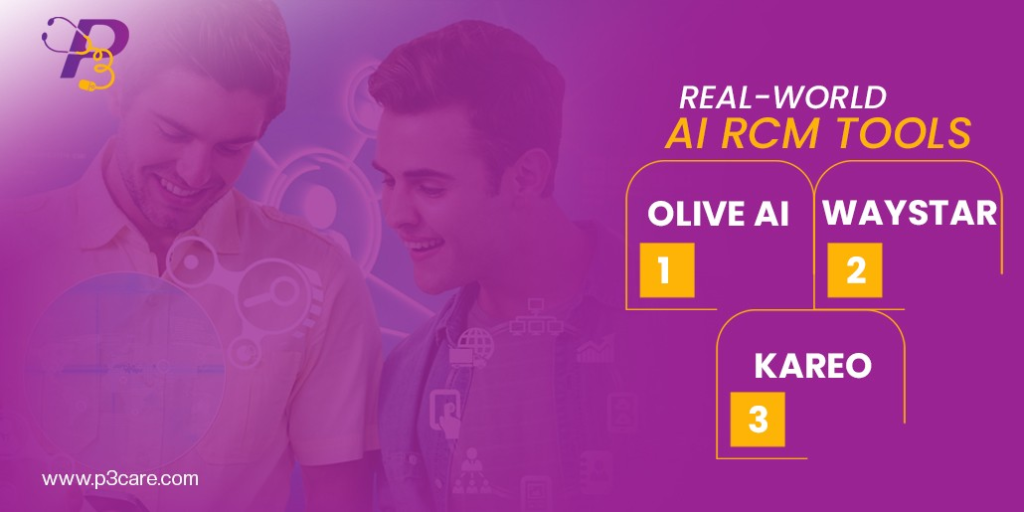
Platforms like Waystar and Olive AI use AI-powered predictive analytics to forecast claim denials. These tools help providers quickly address issues, reduce errors, and improve claim approval rates.
Hospitals implementing AI-driven predictive analytics have seen a 20% increase in claim approvals, which improves cash flow and reduces administrative burdens.
AI is a powerful tool for enhancing revenue cycle management, particularly in financial forecasting and optimization. By analyzing payment trends, patient behavior, and financial risks, AI can help healthcare organizations make smarter decisions and improve their overall financial health.
AI analyzes vast amounts of data to uncover trends in patient payments, claim outcomes, and other key financial factors. This allows healthcare providers to identify patterns, predict future cash flow, and optimize their billing strategies accordingly. With AI-driven insights, hospitals and clinics can adjust their approach to maximize revenue.
Smarter Decision-Making
AI provides real-time insights that allow healthcare providers to make data-driven decisions about pricing, payment plans, and resource allocation.
Healthcare organizations using AI for revenue optimization report a 15–25% improvement in collection efficiency and better overall financial management.
Several AI-driven platforms are making a significant impact on revenue-cycle management in healthcare. These tools automate processes, reduce errors, and improve the overall efficiency of claim management and billing. Here are some prominent AI RCM services that healthcare providers are using today.
Faster Revenue Collection: Speeds up the claims processing and approval cycle.
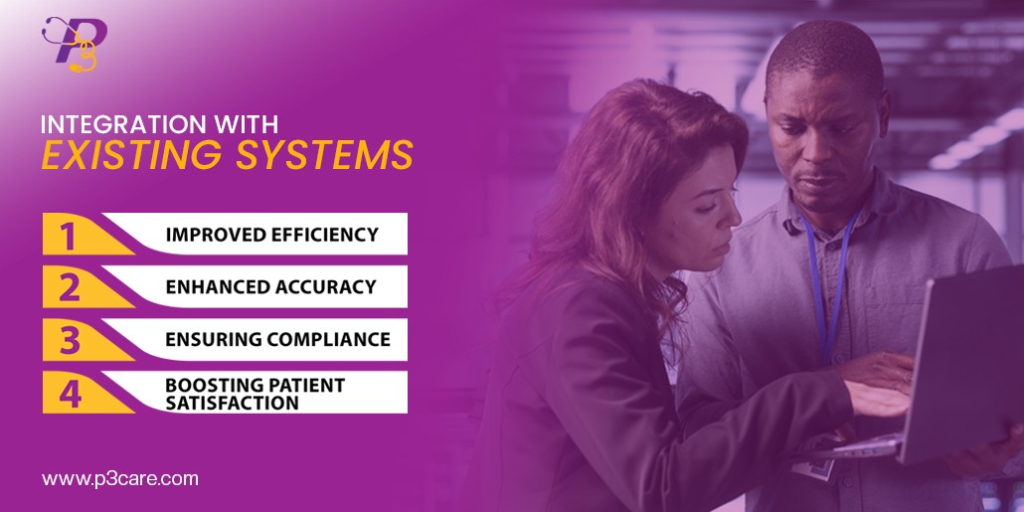
AI’s role in healthcare billing goes beyond just automation—it’s reshaping the entire process, bringing in efficiency, accuracy, compliance, and higher patient satisfaction. Let’s break down how P3care AI is making these improvements in real time.
One of the biggest challenges in healthcare billing is the sheer volume of administrative tasks. AI helps reduce the manual workload by automating time-consuming processes like data entry, patient registration, and insurance verification. This not only saves valuable time but also reduces costs across the board. According to McKinsey & Company, AI could save the healthcare sector $150 billion annually by automating administrative functions, including billing and coding.
Billing errors are one of the primary causes of denied claims, which can delay revenue collection and add unnecessary costs. AI-powered systems improve billing accuracy by analyzing historical data and identifying potential errors in real-time. Studies show that AI can reduce errors by up to 40%, significantly improving the chances of getting claims approved. By flagging coding issues or missing information before submission, AI ensures that claims are accurate from the start, resulting in quicker payments and fewer rejections.
Keeping up with changing healthcare regulations is a tough task for healthcare providers. AI helps by automatically updating billing codes and ensuring all claims are compliant with the latest industry standards. This reduces the risk of legal complications and makes audits smoother. Given the dynamic nature of healthcare regulations, having AI in place ensures providers don’t fall behind or miss crucial changes.
While AI is often associated with operational improvements, it also plays a key role in improving patient satisfaction. Billing can be a confusing and frustrating process for patients, but AI simplifies it. Tools like AI-powered chatbots provide immediate, 24/7 responses to billing inquiries, helping patients better understand their charges and payment options. This enhances transparency and creates a smoother, more positive experience for patients, while reducing the strain on customer service teams.
One of the primary challenges in adopting AI for RCM is integrating it with existing EHR/EMR systems. These systems often come with legacy software that might not be easily compatible with new AI tools. For successful integration, healthcare organizations must ensure that their AI solutions are compatible with their existing infrastructure, which might require additional time and resources.
AI is no longer just a futuristic concept—it’s a practical, game-changing tool for healthcare organizations aiming to improve RCM efficiency. From automating administrative tasks to optimizing revenue and predicting claim outcomes, AI in revenue cycle management is driving smarter, faster, and more accurate financial processes. With advanced AI RCM services like Olive AI, Waystar, and Kareo, healthcare providers can reduce billing errors, ensure compliance, and boost patient satisfaction—all while recovering millions in lost revenue. As P3Care AI healthcare billing automation continues to evolve, embracing these tools will be essential for staying competitive and financially resilient in today’s fast-changing healthcare landscape.
AI in revenue cycle management refers to the use of artificial intelligence technologies—like machine learning, automation, and predictive analytics—to improve financial operations in healthcare. It helps with billing, claims processing, and identifying revenue leaks, all while reducing manual errors and administrative workload.
AI RCM improvements can reduce billing errors by 30–40% and increase claim approval rates by up to 20%. Additionally, AI tools help staff process claims faster, cut administrative overhead, and improve overall cash flow.
Not necessarily. Many AI RCM services offer scalable pricing, making them accessible even for smaller practices. While upfront costs may vary, long-term savings from reduced errors and improved collections often outweigh the initial investment.
Healthcare billing AI improves transparency by providing 24/7 support through AI-powered chatbots and clearer billing explanations. This reduces confusion, increases trust, and enhances the patient experience.
Yes. AI healthcare billing automation can analyze past claims, flag potential errors, and recommend corrections before submission. This proactive approach significantly lowers the chance of claim denials and improves revenue recovery.
Top AI RCM services include platforms like Olive AI, Waystar, and Kareo. These tools help improve RCM efficiency by automating routine tasks, forecasting cash flow, and ensuring compliance with billing standards.