
Choosing a health insurance provider can be overwhelming due to the wide variety of plans, costs, and coverage options available. Between trying to figure out deductibles, copays, and networks, it is tempting to just pick a random plan and hope for the best. However, when medical bills start rolling in, having the right company behind you changes everything.
The U.S. healthcare market is massive, generating well over $1.5 trillion in annual premiums. Behind that huge economy, the industry is heavily consolidated. According to data tracked by the American Medical Association (AMA), most local health insurance markets are dominated by just a handful of major players who call the shots.
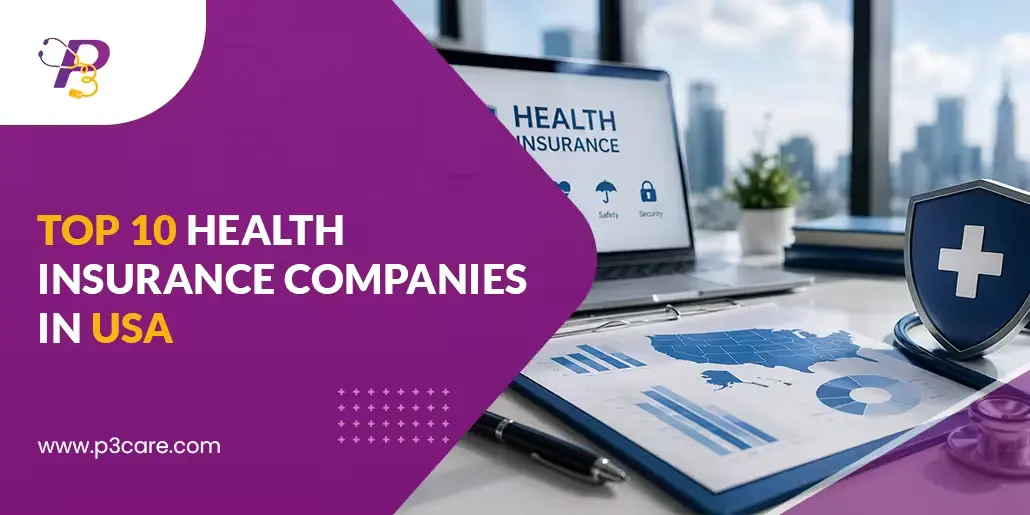
To help you figure out who these powerhouses are, what they actually do, and why they lead the pack, we’ve put together a breakdown of the top 10 health insurance companies in the USA, backed by real industry data from the National Association of Insurance Commissioners (NAIC).
If you’ve ever looked into health insurance, you’ve definitely come across UnitedHealthcare. They are the undisputed heavyweight champion of the American insurance sector, commanding the biggest slice of the national market and operating across all 50 states.
Why they lead: They are simply everywhere. Through their tech and pharmacy services arm, Optum, they manage data and prescriptions for over 100 million people. Add in a massive network of over 1.5 million doctors, and you get an all-in-one health ecosystem that is tough for anyone else to match.
Since acquiring Aetna in 2018, CVS Health has evolved into an integrated healthcare company combining insurance, pharmacy, and primary care services. They stopped being just a behind-the-scenes insurance company and turned into a front-row retail healthcare experience.
Why members choose them: Convenience is their superpower. As a policyholder, you get perks that connect your health coverage straight to physical spots like 9,900 CVS retail locations and 1,100 walk-in MinuteClinics, making quick checkups and routine shots significantly more convenient.
Based out of St. Louis, Centene is one of the nation’s largest Medicaid-focused insurers that keeps government-sponsored healthcare running. While other insurers fight over corporate clients, Centene steps up for low-to-moderate-income families, state Medicaid programs, and Affordable Care Act (ACA) Marketplace shoppers through brands like Ambetter.
Key strengths: They have mastered government care, managing Medicaid deals across 31 states. Close to three-fifths of their massive revenue comes from helping individuals and families who traditional commercial insurance companies usually overlook.
If you or your parents are getting close to retirement age, you may already know Humana. They carved out their entire legacy by focusing almost exclusively on older adults, with roughly 93% of their revenue coming directly from government-backed senior programs.
Best known for: Humana is widely recognized as one of the leading Medicare Advantage providers. Operating Medicare Advantage plans across 46 states and D.C. (covering about 85% of all U.S. counties), they pair their insurance with dedicated CenterWell primary care clinics to keep older Americans healthy and out of the hospital.
Elevance Health is the biggest for-profit player flying the Blue Cross Blue Shield flag. They run Blue Cross branded plans across 14 key states while also plugging deeply into the national BCBS network to cover huge corporate employers.
What sets them apart: They strike a rare balance between local trust and massive corporate muscle. Through their Carelon health services unit, they touch the lives of roughly one-in-three Americans by seamlessly blending mental health support, virtual care apps, and pharmacy benefits.
Operating mostly out of the West Coast and a few select regions (covering nine states and Washington, D.C.), Kaiser Permanente does things completely differently than every other company on this list. Instead of acting as a middleman between you and a doctor, Kaiser Permanente operates an integrated care model that combines insurance, hospitals, and physicians within one organization.
Standout features: They own their hospitals, run their own clinics, and directly employ their physicians. Because everything lives under one roof, they cut out endless insurance paperwork and red tape, consistently pulling top scores for patient satisfaction.
HCSC is the largest customer-owned health insurer in the entire country. Operating as the Blue Cross Blue Shield licensee across five powerhouse states (Illinois, Montana, New Mexico, Oklahoma, and Texas), they answer to their members, not Wall Street stockholders.
Why them: Because they are customer-owned (a mutual legal reserve company), extra money doesn’t get shipped off to outside investors as dividends. Instead, profits get funneled right back into member benefits and community health programs.
Cigna operates as an elite global health services organization. Through their massive pharmacy benefit management arm, Evernorth Health Services, they quietly pull the strings on drug pricing and specialty care distribution for millions of Americans.
Competitive advantage: They are the go-to choice for big businesses. Cigna dominates the employer-sponsored market, helping multinational companies manage complex international health needs, employee counseling, and chronic care programs across borders.
Molina has a great backstory: it was founded back in 1980 by an ER doctor who got tired of watching vulnerable patients get turned away by traditional insurance. Today, they are a Fortune 500 company that still focuses entirely on government-backed programs.
Why choose Molina: Operating across 15 states and Puerto Rico, they specialize exclusively in Medicaid, Medicare, and low-cost ACA Marketplace plans. Because they keep their focus narrow, their customer complaint ratios sit way lower than many of their giant commercial competitors.
GuideWell is the non-profit parent holding company behind Florida Blue, the leading regional insurer in the Southeast. They’ve grown into a major regional powerhouse by focusing heavily on local communities.
Key strengths: They invest heavily in face-to-face support. By setting up physical Florida Blue Centers, they let people walk in off the street to get human help with marketplace plans, senior care, and everyday wellness questions, building incredible local loyalty.
Getting credentialed with major insurers is the first step to treating their millions of members. If you want to bypass the administrative headache and speed up your approval times, P3care can help you get set up correctly.
Get Credentialing Services Today
UnitedHealthcare takes the top spot, holding over 16% of the national market and covering nearly 50 million members across all 50 states.
Not really, the right plan completely depends on your age, where you live, your budget, and whether you prefer lower monthly bills or lower doctor visit costs.
HMO plans make you pick a primary care doctor and get referrals for specialists, while PPOs give you much more freedom to see doctors without pre-approval.
Monthly premiums bounce around from under $100 to over $600, depending heavily on your age, location, and if you qualify for government income discounts.
Most people have to wait for the annual Open Enrollment window, unless a major life event like getting married, moving, or having a baby triggers a Special Enrollment period.